Legacy and remembrance
Good Morning, MidnightLegacy and remembrance is first imagined by Augustine as a scientific achievement that will survive its maker: discoveries preserved in archives and carried forward by future generations. At Barbeau Observatory, amid the apparent end of the world, that confidence fails. His past accomplishments remain vivid, but the institutions and people meant to remember them seem to have vanished. His changing priorities recast legacy not as fame secured after death, but as attention to the living and an effort to restore human connection.
Ambition and imagined permanence
Augustine’s desire to be remembered is bound to his work as an astronomer. He follows advanced telescopes and satellite arrays across continents, treating the places where he lives as incidental beside the sky. His results are groundbreaking and his work ethic strong, yet professional success is not enough: he wants history. He imagines understanding the universe at its deepest scale and presenting that knowledge to colleagues, leaving a discovery large enough to secure his place in the future. In this early conception, remembrance is the anticipated reward for intellectual achievement.
That ambition has a personal dimension. Augustine has imagined his discoveries being taught in universities after his death and discussed by generations of scholars not yet born. Such a future makes mortality seem less consequential: his body may end, but the work will continue to circulate. The promise is not simply that his name will be known. It is that the significance he assigns to his life will be ratified by a future audience, one capable of receiving and extending what he has found.
The archive after catastrophe
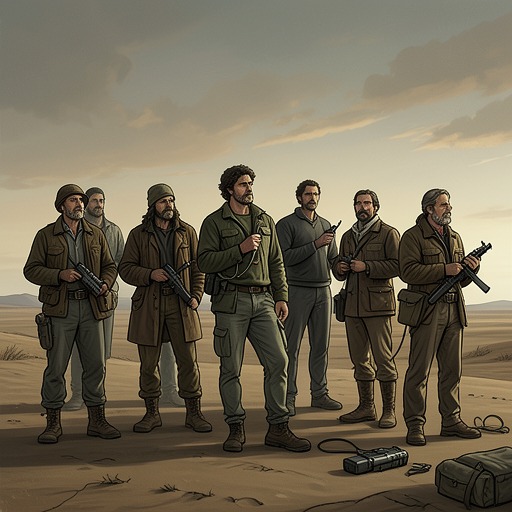
At seventy-eight, Augustine reaches the Arctic archipelago to find that his research has brought him to the limit of what he can understand. The telescope still stands at the center of Barbeau Observatory, and the outpost holds extensive supplies and research equipment, but the surrounding human infrastructure has fallen quiet. The researchers have been evacuated; the last planes departed more than a year earlier, and the last news from civilization reported war. The contrast is stark: the observatory preserves the instruments of discovery, while the world that might have interpreted or celebrated its results is no longer reliably present.
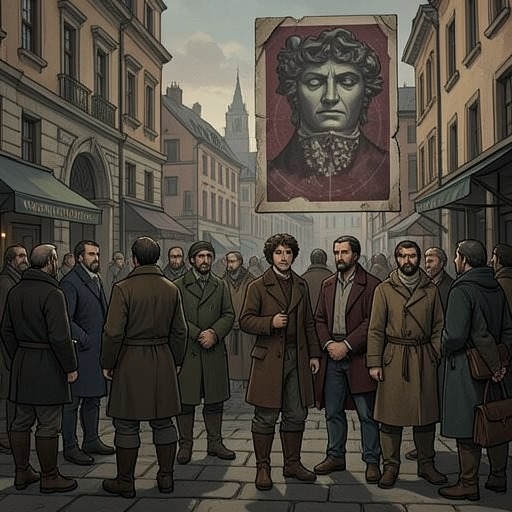
In the tundra’s silence, Augustine remembers his earlier career: tropical observatories, papers, speeches, and lectures that once drew hundreds of people. Admirers had waited to request his autograph. These memories do not console him so much as change their character. What once seemed like evidence of lasting importance now feels spectral because the audience and institutions that gave those accomplishments their public life may be gone. He imagines that the women he knew are dead, his papers burned, and auditoriums and observatories reduced to ruins. These are fears and suppositions, not confirmed accounts of each loss; their force lies in how completely they unsettle his expectation that work will outlive its maker.
From self-continuance to care
Before the evacuation, Augustine had considered the Arctic project a final capstone to his career and had accepted the prospect of dying alone once his work was finished. The end of his scientific life and the end of his own life had seemed connected, while the future mattered chiefly as a place where his legacy might endure. After seeing a polar bear across the mountains, however, he feels gratitude for a presence rather than an absence. Iris is already beside him, but the encounter helps him think beyond his own remaining years and take her future more seriously.
That change makes remembrance less abstract and more demanding. Augustine wants Iris to have connection, love, and community, and recognizes that he cannot keep excusing his inability to offer more than the emptiness he has accepted for himself. The concern does not erase his limitations or supply a ready-made solution; it alters what he considers important. Instead of treating his remaining time as a private conclusion to a career, he begins to measure it against the life and prospects of the child in his care.
A different measure of what remains
The same shift informs Augustine’s renewed search for survivors. After the other researchers leave, he makes tentative attempts to contact whatever people might remain, then gives up when satellites are silent and commercial radio stations have gone off the air. He becomes accustomed to the possibility that everyone is gone. Later, even though he understands that a search is unlikely to find anyone and cannot promise rescue, he feels newly determined to find another voice. He abandons the telescope and turns to radio waves. The act cannot guarantee an answer, but its purpose has changed: connection matters even without a foreseeable reward.
The concept therefore moves from a future-facing monument to an uncertain act in the present. Augustine once trusted that scientific archives, universities, and scholars would preserve his significance; the apparent collapse exposes how dependent that vision was on a functioning human world. His emerging sense of duty does not establish that his work will be remembered or that survivors will answer. Instead, the narrative gives weight to what he can still do: care for Iris and seek contact despite the odds. Legacy becomes less a promise of immortality than a responsibility toward another life and a willingness to reach beyond isolation.